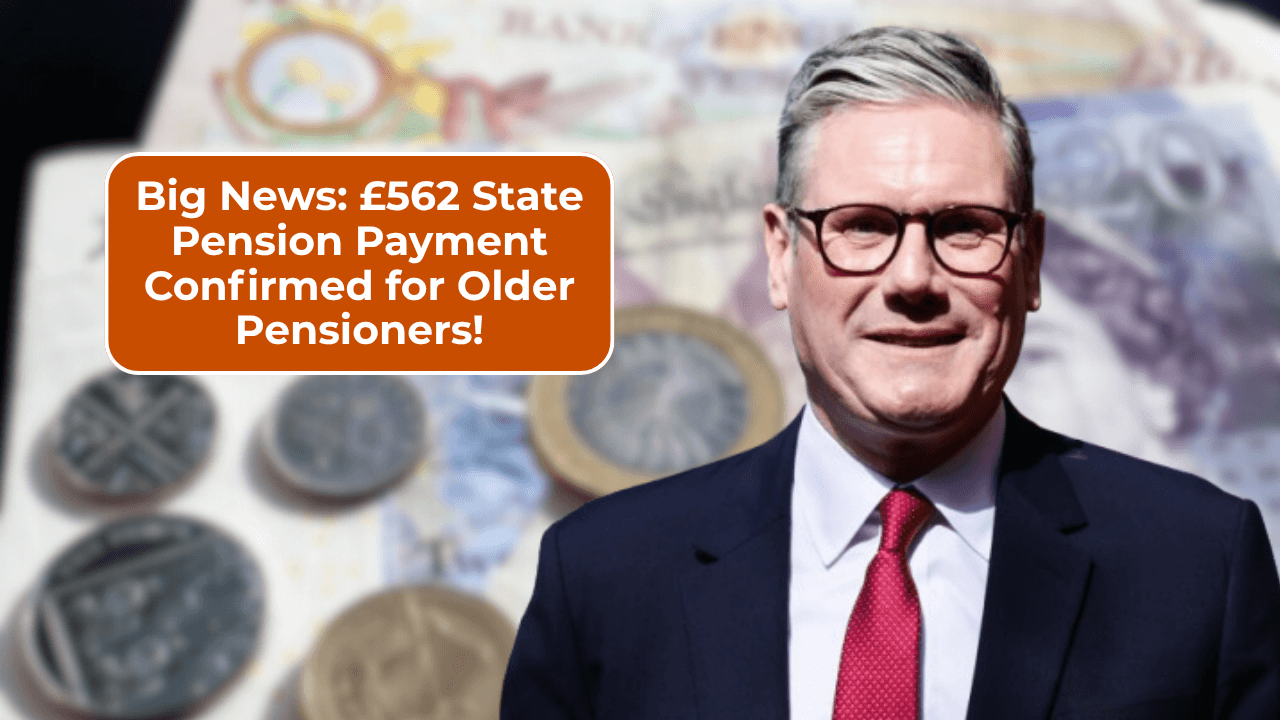
What Is the £562 State Pension Payment?
The UK Government has recently confirmed that thousands of older pensioners will soon receive a £562 State Pension payment. This announcement has been welcomed as a much-needed financial boost, especially at a time when the cost of living continues to rise and many retirees are struggling to balance household budgets.
The confirmed payment represents an important recognition of the financial challenges older citizens face, particularly those relying heavily on the State Pension as their primary income. While the exact amount may vary depending on eligibility and circumstances, the confirmed £562 payment has created fresh hope for pensioners looking for extra financial security.
Why This Payment Matters
For millions of people across the UK, the State Pension is not just a supplement but the cornerstone of their retirement income. Although some retirees may have private or workplace pensions, many rely almost entirely on the payments they receive from the Department for Work and Pensions (DWP).
With energy bills, food prices, and other essentials increasing steadily, every extra payment can make a real difference. The £562 boost could help older pensioners manage critical expenses such as:
- Winter fuel costs
- Grocery shopping
- Medical needs and prescriptions
- Travel expenses to attend hospital appointments
- Day-to-day living costs
This is why the announcement has been described as “big news”—because it recognises the pressure pensioners are under and provides immediate relief.
Who Will Receive the £562 Payment?
Not all pensioners will automatically qualify for this exact figure. The payment is linked to specific eligibility criteria, which the DWP has outlined. Generally, those who have reached State Pension age and meet certain contribution or benefit conditions will benefit.
Older pensioners who may qualify include:
- Individuals who receive the basic State Pension and meet the requirements for the additional payment.
- Pensioners over a certain age bracket who are entitled to enhanced support.
- Those who may also be receiving Pension Credit or other supplementary allowances.
For many, this payment will arrive automatically in their bank accounts, without the need to apply separately. However, in some cases, pensioners may need to ensure their details are up to date with the DWP to avoid delays.
How Does It Fit with the Triple Lock?
One of the biggest ongoing debates around the State Pension is the Government’s “triple lock” guarantee. This policy ensures that the State Pension rises each year by the highest of three measures:
- Inflation (measured by the Consumer Prices Index)
- Average earnings growth
- A minimum of 2.5%
The £562 payment works alongside the triple lock system. While the triple lock ensures that pension rates keep pace with rising living standards, one-off or additional payments like this are designed to give pensioners short-term relief. In practice, this means pensioners benefit from both the annual increase and extra targeted support.
How Will Pensioners Receive the Money?
The DWP has confirmed that eligible pensioners will receive the £562 payment directly into their bank accounts. This is the same method by which regular State Pension payments are made, ensuring security and simplicity.
There is no need to fill in new forms or make a special claim. However, pensioners are encouraged to:
- Check that their bank details with the DWP are up to date.
- Ensure they are registered for all benefits they are entitled to, such as Pension Credit.
- Be cautious of scams or fraudulent calls claiming to represent the DWP.
What This Means for Pensioner Budgets
For a household living on a modest fixed income, an extra £562 can go a long way. Consider some of the ways older pensioners might use this payment:
- Covering the rising costs of heating during the colder months.
- Paying for food shops without needing to cut back on essential items.
- Helping with rent, council tax, or other regular bills.
- Supporting independence by covering transport or mobility costs.
While £562 may not completely erase the pressures of inflation, it provides a valuable buffer that can reduce financial stress.
How This Payment Compares to Previous Support
Over the last few years, the Government has provided several different forms of financial help for pensioners. These have included:
- Winter Fuel Payments
- Cost of Living Payments
- Cold Weather Payments in certain regions
- Pension Credit top-ups
The newly confirmed £562 stands out because it is not limited to just energy costs or means-tested households. Instead, it provides wider support, acknowledging that many older pensioners—regardless of their precise circumstances—are feeling the pinch.
The Role of Pension Credit
One key point for older pensioners is the link between this new payment and Pension Credit. Pension Credit is a benefit that tops up weekly income for those below a certain threshold. Yet, it remains under-claimed, with thousands of pensioners missing out every year simply because they do not apply.
For many, claiming Pension Credit can unlock not just higher income but also access to other benefits such as:
- Free NHS dental treatment
- Help with heating bills
- A free TV licence for those over 75
- Housing benefit support
The £562 payment may be another reason for pensioners to check whether they qualify for Pension Credit.
Wider Context: Rising Living Costs
The timing of this confirmed payment could not be more crucial. Across the UK, households are facing sustained rises in the cost of living. Inflation may have slowed compared to its peak, but essentials remain expensive.
- Energy bills remain higher than pre-crisis levels.
- Food prices have risen dramatically in the last three years.
- Transport and fuel costs continue to weigh heavily on household budgets.
For pensioners on fixed incomes, these pressures can feel overwhelming. Unlike working households, older pensioners often do not have the option of increasing their income through work. That makes support such as the £562 payment even more significant.
Reactions from Pensioner Groups
Charities and organisations representing older people have welcomed the news. Age UK, for instance, has long campaigned for fairer treatment of pensioners and highlighted the risks of poverty among older households.
These groups have stressed that while the £562 payment is positive, more long-term solutions are needed. Campaigners argue that:
- The State Pension should be raised permanently to ensure no pensioner lives in poverty.
- More awareness is needed around Pension Credit and other entitlements.
- Support must keep pace with the actual costs older households face.
What Pensioners Should Do Next
If you or someone you know is an older pensioner in the UK, here are the practical steps to take regarding the £562 State Pension payment:
- Check Eligibility – Confirm whether you meet the criteria outlined by the DWP.
- Update Details – Ensure your bank information is current with the DWP.
- Apply for Pension Credit – Even if you think you might not qualify, check, as it can unlock extra support.
- Beware of Scams – Payments will be automatic; the DWP will not ask for personal details over the phone.
- Budget Wisely – Consider how best to use the £562 to cover key expenses.
Looking Ahead
The confirmation of this payment is a welcome step, but the conversation around pensioner support is far from over. With ongoing economic uncertainty, many experts believe further measures will be needed in the years to come.
The UK’s ageing population means that pension policy will remain a central political issue. Ensuring that older people live with dignity, security, and financial stability is not only a moral responsibility but also a measure of a fair society.
Final Thoughts
The confirmed £562 State Pension payment is indeed big news for older pensioners across the UK. It offers timely financial relief and demonstrates that the Government recognises the pressures retirees are facing.
While challenges remain, this payment is a meaningful step forward. For pensioners worried about day-to-day expenses, the extra money provides reassurance and breathing space. For the wider community, it highlights the importance of continued support for those who have contributed to society throughout their working lives.